
We are Trained to Become Leaders. But is that Enough? A Reflection on “Ethical Leadership” in the Cambridge Context
Written by Leni Klöcker
On the 27th of November, the King’s E-Lab hosted a fireside chat with Provost Gillian Tett and Susanna Kempe, CEO of the Laidlaw Foundation, to celebrate the new launch of the Laidlaw Leadership and Research Programme. The programme allows first year undergraduate students from any discipline to engage in independent and full-funded leadership and research projects over the course of 18 months. The programme is designed to support the next generation of ethical leaders.
But what does this support mean in the context of Cambridge University? What opportunities does it truly provide? And how can the programme ensure meaningful change?
Leaders, Privilege and Responsibility
When studying at Cambridge, you are not only confronted with the legacy of leaders that attended the university before you, but with a crowd of fellow students that intend to follow in their footsteps. Sometimes, this seems like a constant struggle to distinguish yourself from others: ask the most questions in lectures, go to as many networking events as possible, and do everything to find out what could make you a future leader. Is it charisma or tradition? Is it a lack of scruples or good intention? Valuable connections? Your Cambridge Union Membership?
In many cases, however, what puts someone in a position of leadership is opportunity. Just look at the overrepresentation of Members of Parliament who come from private schools: although on an all-time low compared to earlier elections, the 23% of privately-educated MPs does not nearly reflect the distribution of private school attendance in the wider population. Opportunity starts with the primary school we go to, the books our parents gift us, the extracurriculars our school offers, the Universities our teachers suggest. Even though we find these differences everywhere, places like Cambridge can make us particularly aware of the imbalance. Chances like the Laidlaw Programme, are only one example of the exclusive educational possibilities available at Cambridge (and a few other select universities); spaces that often hold a lot of privilege to begin with.
These possibilities work within the ways of our unequal education system, which is a fact that has increasingly frustrated me. Is it not paradox to preach ethical leadership and then only support an already privileged group of students in their aspirations?
When asked about this during the fireside chat, Susanna Kempe made clear that this potential contradiction is discussed extensively within the organisation as well. Her answer, in overview, suggested that the Laidlaw Programme doesn’t aim at making the leaders of the future but at making the leaders of the future good. There is a strong effort to make sure those who are likely to end up in positions of leadership, as many students at Cambridge are, are encouraged to embody the values of good leadership. This does not directly challenge our imbalance of opportunity more widely; but aims to ensure the beneficiaries of such an imbalance are trained to make choices that serve a greater purpose rather than only a personal gain.
Does this actually tackle the injustice of access to opportunity at the heart of an unequal education system? Likely not. At the same time, for students at the University of Cambridge like myself, this consideration also forces self-reflection. If we are serious about making a positive impact but do not believe in “doing good” from within a system of inequality, we should not have applied to this University to begin with.
This tension, whether it is more effective to tackle injustice in institutions from within the institution or from outside of it, is one that has been debated in and beyond the field of educational equality. Both sides have convincing arguments and reputable proponents. Yet, to a certain extent, its comparison is artificially created – because why not do both?
Questioning the Concept of ‘Good’ Leadership
While initiatives like the Laidlaw Leadership and Research Programme do not immediately tackle the underlying injustice, they encourage a realisation that I find incredibly important: we often define success as something very ego-centered. Our universities, often carrying centuries’ old traditions of knowledge, curiosity, and academic exchange, have seemingly become breeding grounds for “high-achieving individuals” and a mindset that defines success as monetary and exploitative; with resources and people as collateral damage of personal ambition.
To support our reflections on responsibility and privilege, the Laidlaw Programme must encourage a critical interrogation of what we see as public good and urge us to imagine a new evaluation of success. What and who defines the common good or ethical decision-making are vital and valid to question, and we should embrace that interrogation. For example, is a programme for “positive leadership” not a very subjective term? Are we inevitably forcing Eurocentric or Christian or neoliberal values on the rest of the world if we use the Sustainable Development Goals to define objectives of good leadership? From what sources do we draw to define ‘good’ leadership?
This programme must be an opportunity to tackle these questions and to create a discourse on leadership that not less prone to actual change but is also intentionally diverse. Only then will we see it make the difference that it can make.
Belief in Meaningful Change
At the same time, the Laidlaw Programme should also encourage us to believe that we can, and we should, take up the responsibility to make meaningful change in the world (even as we encourage critical reflection). In my first term here, I have already met so many clearly capable, intelligent people, but I am also confronted with just as much cynicism. The motivation of “making the world a better place” to explain decision-making often sounds hollow, like a worn-out phrase from a personal statement that has no chance of defying the harsh reality of a competitive job market. I find this observation terrifying. If not even we – students with this exceptional access to educational resources – believe that our skills, knowledge, and work can have a positive impact on the world, then who do we expect to believe this?
I don’t think anyone to single-handedly save the world, but we should continue to believe that we can make a difference. While a healthy attitude of critical thinking is vital, in Cambridge it feels as though we often cultivate this attitude to a point of personal paralysis, just to prove that we are capable of questioning everything. Yet, if our belief remains with the status quo but is merely adorned with a good conscience or a sprinkle of self-reflection, we do not do justice to the responsibility that our privilege entails. The Laidlaw Programme can and should ensure that proclamations of a desire to change the world for the better ring true, both for those who say them and those who hear them.
I am convinced that in the current state of the world, we are confronted with a degree of injustice and inequality that is universally condemnable but many are still unable to see clear paths for action. In other words: I cannot lose another friend in Humanities to a fossil fuel consultancy firm just because the SDGs are sometimes seen as contested guidance for ethical leadership. I want us to acknowledge that while we might not agree on the details of what it truly means to make the world a better place, most of us share a common goal of human survival and dignity that our work should support. No one with the resources, talent and opportunities that many of us have should believe they cannot use their force for good. We cannot afford that.
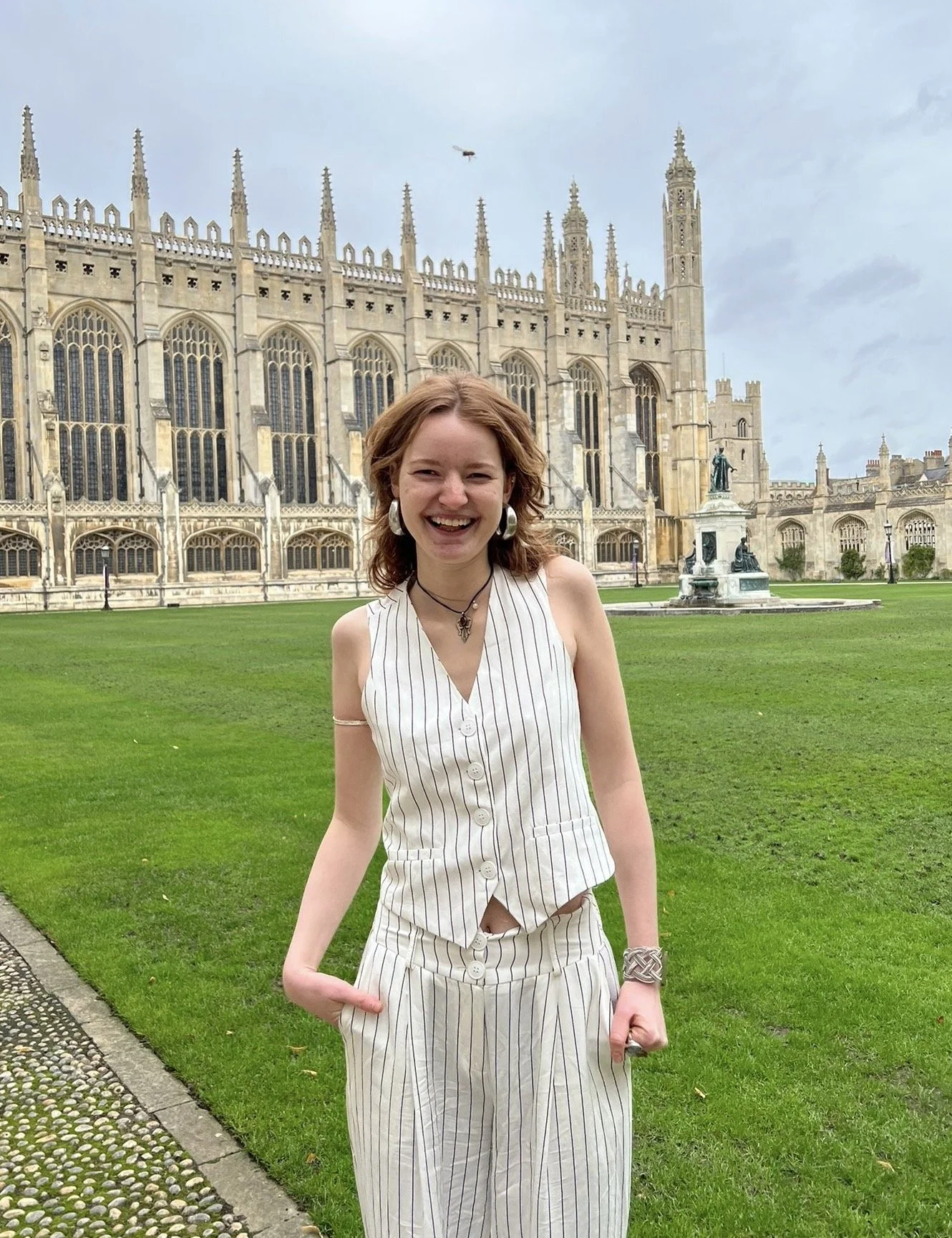
Leni Klöcker is a first-year undergraduate in Human Social and Political Sciences at King’s College, University of Cambridge. She is also an activist with Cambridge Climate Justice, currently advocating for the University to end recruitment pipelines into the Fossil Fuel, Mining and Arms industry.