
How do Entrepreneurs Build a Strong Team, and Why is this Important for a Start-up’s Success?
Written by Rahul Thotakura
This piece comes from an E-Lab Entrepreneurship Essay Competition winner from the 2024 competition. For more information about the Essay Competition, and to see the other winning entries, see this overview post.
Building a Strong Team: The Keystone of a Start-Up Success
A visionary entrepreneur usually excels at articulating ideas and driving action, but the execution of ideas requires a dedicated team. For any start-up founder, creating and cultivating this team is one of the most important and challenging tasks. In the fast-paced, resource-constrained setting of a start-up, the quality of the team often determines success. In this essay, I explore how entrepreneurs develop strong teams, discuss the importance of teambuilding, and outline enduring frameworks and leadership principles to guide the process for the long term.
A Robust Start-up Team is Indispensable
A start-up team is more than a collection of personnel; it is the bedrock of the innovation, execution capabilities, and culture of the company. Team dynamics factor into 18% of start-up failure reasons (Figure 1), the third highest factor.
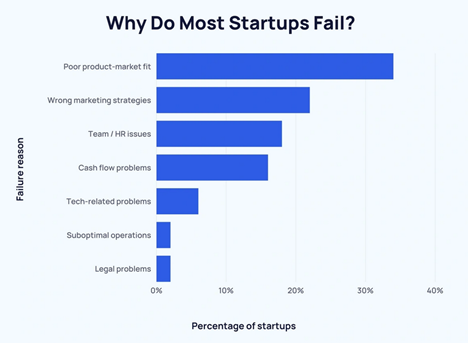
This essentially human element is paramount when starting a business. With nearly one-fifth of start-ups going under because of poor communication, absence of trust, divergent goals, or other team-related issues, it is a reminder that even the most brilliant ideas need a strong, united team to support them if they are to succeed.
Team efficiency is also not only a matter of ‘N’ distinct skill sets. There is a need for creative problem solving, resilience, and operational efficiency for the smooth functioning of the organisation. Take Airbnb, for example, who demonstrated how a company can efficiently grow to super-competitive levels by strategically defining its teams with complementary skills and encouraging openness within the company culture. [2] Airbnb was able to overcome many early challenges, proving how critical strong teams are for start-up survival and growth.
Identifying the Right Team Composition: Theories and Models
Entrepreneurs who are building their teams must grasp the concept of team relations and group dynamics deeply. Bruce Tuckman’s model of group development offers keen insights for those interested in honing these understandings. He speaks about four stages: forming, storming, norming, and performing. [3] In the forming phase, the team members meet each other and understand what roles they play in the team. The storming phase brings conflict as people try to promote their views. Norming is the resolution of conflict and, finally, performing is a mature stage where the team is goal-oriented. Effective entrepreneurs, like Stewart Butterfield from Slack [4], manage these stages through strong communication and conflict management, which allowed their teams to develop cohesively during the rapid growth period.
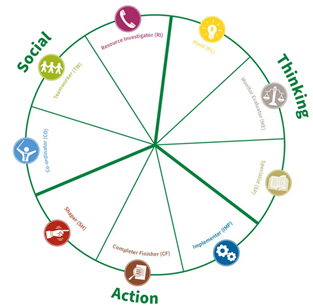
Alongside this, Meredith Belbin’s team role theory identifies nine individual roles people usually assume, ranging from creative “Plants” to meticulous “Completer Finishers” (Figure 2) [5].
This model explains why equipoise matters in teams: every role adds measurable value in sharpening innovation, execution, or problem-solving. Entrepreneurs can use the diagram to understand the need for functional diversity in skills and temperaments to form a start-up team that performs at a high level. The American eyewear company Warby Parker serves as a great example of where its founders sought a diverse team covering many roles which supported their innovative approach as well as operational success. The principles of the company, to corporate social responsibility, was at the core of its approach towards building teams and this helped them grow while maintaining cohesion [6].
As important as hiring the right people is, motivating them is also critical. Creativity and self-actualisation [7], the highest levels of personal development, cannot be achieved unless an individual’s physiological and safety needs are fulfilled. For start-ups, this translates to fostering a culture where team members feel safe, appreciated, and adequately challenged. Google has been noted for placing much emphasis on psychological safety—where employees are encouraged to take risks and express ideas without fear of scrutiny, which has been linked to innovation [8]—and this has been a practical application of Maslow’s theory.
The McKinsey 7S is also valuable when considering alignment of individual and organisational objectives. It shows entrepreneurs the alignment of seven interacting factors that drive organizational effectiveness:
• Strategy: The plan to achieve competitive advantage.
• Structure: The organization of teams and reporting lines.
• Systems: Daily procedures and processes.
• Shared Values: Core beliefs guiding the company culture.
• Skills: The capabilities of the employees.
• Staff: The people themselves and how they are managed.
• Style: Leadership approach and organizational behaviour.
Returning to Airbnb, through hospitality, shared values unified diverse cultures, they supported operational scaling with clearly defined structures and systems.9
Leadership Styles That Empower Start-up Teams
Leadership is crucial to team development. Transformational leadership helps when team members are inspired by a vision, and encouraged to take risks and innovate in the confusing early days of a start‐up. Sara Blakely, of Spanx, started by investing $5,000 and built her team around trust, innovation, and taking risks. She famously said, “It’s important to be willing to make mistakes. The worst thing that can happen is you end up being memorable" [10]. Charisma and good leadership motivated her small team to "push the envelope" with limited resources and in early development.
For a contrasting narrative, we have Elizabeth Holmes and Theranos. The culture of poor transparency and communication created a toxic company where the lack of openness led the company to an inevitable failure. This case presents a stark example of how one ground breaking idea could likely never have succeeded without leadership and teamwork as a part of the picture [11].
Mixing styles of leadership depending on the context is also important for founders to consider. The astute entrepreneur, like Stewart Butterfield of Slack, applies both transformational and transactional leadership styles to suit the situation. He often describes his own effective switch between the two whereby he inspires the team with transformational leadership, and applies transactional leadership to performance management processes to support productivity, effectiveness, and morale [12].
Practical Steps Entrepreneurs Take to Build Strong Teams
Entrepreneurs are not loners, they are team builders. Whenever start‐ups launch, many of these company founders bootstrap and self‐fund using their personal wealth, which limits their ability to hire employees with salaries that are competitive. When equity stakes are offered, these can be used effectively as a tool to entice individuals to work; committed to the long term interests of the start‐up. When entrepreneurship exceeds the self‐funding or bootstrapping stage and starts attracting capital from VC's, this likewise enables the rapid hiring of employees while ideally maintaining momentum.
Clear role definitions are essential to avoid overlap and confusion, ensuring everyone knows their responsibilities. Entrepreneurs also prioritise creating a culture of continuous learning and open feedback, which promotes agility and helps teams respond effectively to challenges.
Building a strong start-up team isn’t just a box to tick; it’s the skeleton that supports everything. Theories like Tuckman’s stages, Belbin’s team roles, and Maslow’s hierarchy provide entrepreneurs with frameworks to understand and nurture their teams while leadership styles and organisational models, like McKinsey’s 7S, ensure teams are guided effectively through growth and change. In the grand scheme of things, however, what really matters is applying these insights in real-world situations—hiring thoughtfully, creating a culture where people feel safe to take risks, and balancing inspiration with realistic expectations.
As history reminds us time and time again, it’s always the team’s unity, adaptability and perseverance that ultimately determines whether a start-up survives and thrives in an increasingly competitive globalised market.
Original Prompt: Q3: How do entrepreneurs build a strong team, and why is this important for a start-up’s success? Provide examples.
Bibliography
1 Exploding Topics (2025) 'Startup Failure Rate Statistics'. Available at: https://explodingtopics.com/blog/startup-failure-stats (Accessed: 8 July 2025).
² Airbnb (2021) Company Culture and Growth. Available at: https://www.airbnb.com/resources/host-guides (Accessed: 8 July 2025).
³ Tuckman, B.W. (1965) ‘Developmental sequence in small groups’, Psychological Bulletin, 63(6), pp. 384–399.
⁴ Fast Company (2019) ‘How Slack’s Team Overcame Growing Pains’. Available at: https://www.fastcompany.com/slack-growth (Accessed: 8 July 2025).
5 Belbin, R.M. (2010) Team Roles at Work. Available at: https://www.belbin.com/about/belbin-team-roles/ (Accessed: 8 July 2025).
⁶ Warby Parker (2020) Our Team and Culture. Available at: https://www.warbyparker.com/culture (Accessed: 8 July 2025).
⁷ Maslow, A.H. (1943) ‘A Theory of Human Motivation’, Psychological Review, 50(4), pp. 370–396.
⁸ Google Re:Work (2016) Psychological Safety and Innovation. Available at: https://rework.withgoogle.com/guides/psychological-safety/ (Accessed: 8 July 2025).
⁹ McKinsey & Company (2008) ‘The 7S Framework’. Available at: https://www.mckinsey.com/business-functions/organization/our-insights/the-7s-framework (Accessed: 8 July 2025).
¹⁰ Forbes (2018) ‘Sara Blakely’s Leadership Style’. Available at: https://www.forbes.com/sara-blakely-leadership/ (Accessed: 8 July 2025).
¹¹ The Wall Street Journal (2019) ‘Theranos: The Rise and Fall of Elizabeth Holmes’. Available at: https://www.wsj.com/theranos-story (Accessed: 8 July 2025).
¹² Harvard Business Review (2017) ‘Transactional vs. Transformational Leadership’. Available at: https://hbr.org/transactional-transformational-leadership (Accessed: 8 July 2025).