
Synthetic Voice, Real Catastrophe
Written by Sue Trory
As Karen and I jumped off the bus and hurried towards King's to see Colossal Wreck, a documentary film by Josh Appignanesi, I sensed we were in for a typically thought-provoking evening in Cambridge, one which my long-term friend visiting from her Spanish mountain home, would take back with her as a fond and quirky memory of her time in the city.
We were making our way to the screening on the recommendation of Michelle, an inspirational and creative lecturer at the Judge Business School, who incorporates film in interesting ways in the Social Impact Master's Programme on which she teaches. Her own interest in this film stemming from co-authorship of a forthcoming book on just transitions, a set of principles guiding the shift to a low-carbon economy in a fair and equitable way. Any event flagged by Michelle piques my interest and when she also mentioned this was a King's Entrepreneurship Lab do, it wasn't long before the Eventbrite tickets were safely stored in my Apple wallet.
What followed was indeed 'one of those Cambridge evenings' which brought together an eclectic mix of curious minds under the same grey February city sky to consider the wonderful weirdness of the world; this time through a film exploring the irony of the 2023 COP28 climate conference being hosted in Dubai, the famously manufactured metropolis risen from the desert within a single generation, and where, to use the filmmaker's own words, "oil money is converted into concrete, glass, and false optimism".
Colossal Wreck is shot entirely on a small handheld camera. And you feel it. There is no crew, no distance, no cinematic gloss. It is simply Appignanesi, a selfie-stick, and the eerie spectacle of a city that should not exist. Built in a burning desert, kept alive against nature at enormous cost, Dubai presents itself to its 80,000 COP28 visitors in a state of extraordinary, engineered perfection, its towers which Appignanesi calls 'gargantua of insignificance'. What the visitors were not told was that weeks earlier, calamitous floods had devastated the very highways that had brought them together to the conference centres. The footage of this destruction exists: raw, chaotic, unglamorous, but it had been quietly buried. The conference, it seemed, had its own version of events to protect.
The burying of this news struck an immediate chord as only days before, in one of my course seminars on AI Ethics and Society, we had discussed how climate change used to be the crisis of the future until AI arrived and stole the headlines. In this moment, Appignanesi’s words on screen crystallised for me the peculiar irony that we have allowed the most urgent long-term threat to human civilisation to be displaced in public discourse by a technology that is itself a significant and growing contributor to that threat. Words which, up to that point in the film, we had trusted to be narrated by Appignanesi's own voice. I couldn't resist a wry smile, then, when it was revealed, almost in passing, that the narration was in fact an AI-encoded clone of his voice generated by a large language model. In a film about the seductions of the artificial of Dubai, even the narrator could not be trusted to be real.
When Appignanesi's journey in film eventually takes him (and us) to the edges of the COP conference, away from the air-conditioned discussions and negotiations, away from the formal performance of concern, and towards the people on the frontline of climate injustice, it provides a much-needed respite. Not only from the monotone, lifeless synthetic AI-Appignanesi voice, but also from his own personal discomfort at being at the very epicentre of glossy capitalism. It is at this point in the film that we hear the very raw and tear-filled voice of Valdelice Veron of the Brazilian Guarani Kaиowá people recounting the land clearances, rape, and violence by military police. The simple traditional song Valdelice then sings as a gift to the small audience at the side-arena cuts through the alienation, the irony, and the business-as-usual quality of the whole extraordinary parallel gathering and brings deep meaning to the film. Yes, Appignanesi's self-deprecating angst gives the film its accessibility but the most powerful voice in Colossal Wreck is not his. It is undoubtedly Veron’s.
As the film ended, the inevitability of the calamitous journey the Earth appears to be on settled heavily in the room. I looked over to Karen and Michelle and felt it in their silence too. The lights came up and Josh took to the stage. The questions from the Cambridge students were genuinely rigorous: how had he held his own despair steady while making the film? Had the handheld camera been a deliberate choice, through which friction and imperfection of a human being showed so visibly present in a real space? Where do we go from here?
To this last question Josh was adament. We all do what we can by doing the things we enjoy and using the circle of influence and talent we have been given every day. Yes, I thought. We know the growth of AI scales the environmental destruction of the planet. My contribution is learning why and how and sharing that knowledge while living and loving life. That is all we can do.
Reference
Darlington, M. (forthcoming, June 2026). ‘Split-sense and the Just Transition: Contestation and Possibility at COP28’. In Lo, K. (ed.), A Research Agenda for Just Transition. Edward Elgar Publishing.
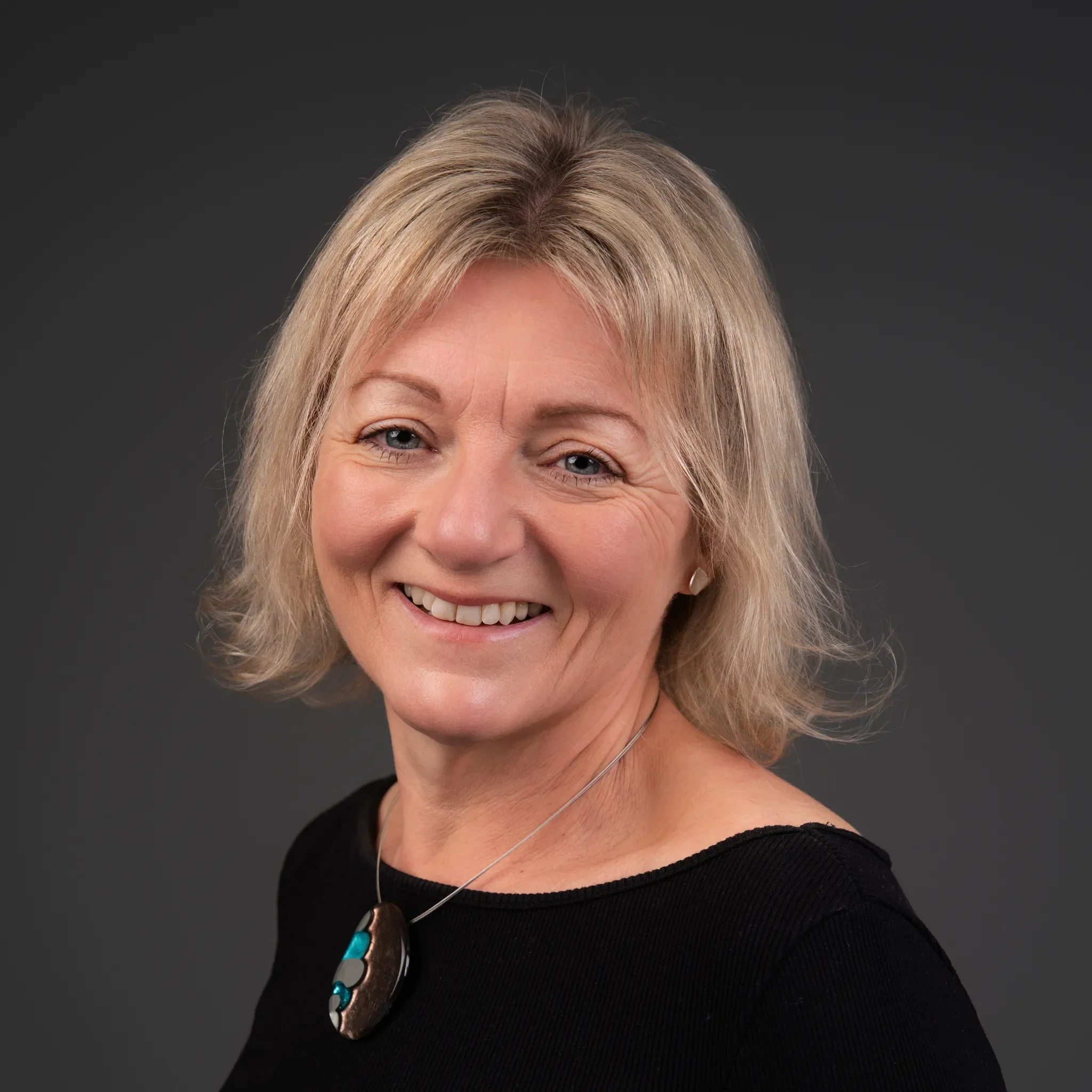
Sue Trory is an independent AI ethics consultant specialising in educational technology and organisational AI governance. With 25 years of senior leadership experience across educational publishing, assessment, and EdTech, she brings a unique combination of commercial acumen, pedagogical expertise, and formal training in AI ethics. Sue has held strategic roles at Oxford University Press (Global Content Director), Cambridge University Press & Assessment (Head of Adult & Higher Education), Macmillan Education (Head of Schools), and Heriot-Watt University, where she led Scholar - Scotland’s leading high school digital learning platform. She has built products worth hundreds of millions in value across global markets and led international teams across engineering, content, and commercial functions. Sue is currently completing an MA in AI, Ethics and Society at Birkbeck, University of London. She advises organisations on responsible AI implementation, critical thinking capability development for AI use, and AI governance frameworks.