
Written by Alex Bartlam
I spent my early twenties as an officer in the British Army, before leaving for King’s to study for an MPhil in Technology Policy. In doing so, I passed through two of Britain’s oldest institutions; which took very different approaches to change. Exploring those differences has shaped how my co-founder and I have built Tallia, along with how we think about the way technology is adopted.
Generally, the Army changes slowly, and for good reason. Defence can move quickly when it must, but for the most part, technology and doctrine do not change on a whim. Potential changes are tested, challenged, and tested again. Cambridge is older still but behaves in almost the opposite way. Despite King’s being founded in 1441, it has spent much of its history being early to change. Members treat centuries of tradition not as a reason to stand still, but as licence to question everything. For an old institution, it is remarkably radical.
It was at the King’s E-Lab that Jack Mander and I (school and undergraduate housemates) started building Tallia. Jack had worked in M&A tax across the Big Four and kept returning to the same problem: the most expensive part of a tax engagement is rarely finding an isolated answer. It is turning that answer into advice a client can rely on. The knowledge needed to do this sits scattered across legislation and a firm’s past work. I came at the problem from another perspective: as a technical Army officer, my job was to make sure systems were secure and dependable before anyone who relied upon them.
Cambridge gave us the space to test whether those two perspectives could combine into a company.
Tax advisory is a profession of precedent and personal accountability. Advisers work from legislation, case law, and decades of guidance and they sign their names - and stake their firms’ reputations - on every piece of advice they give. That makes them justifiably cautious. In tax, an answer that sounds right but cannot be checked is not a shortcut. It is a liability. That principle has shaped Tallia from the start: every point is auditable to its source, so an adviser can check it before relying on it.
But unlike the Army, the tax profession is made up of thousands of firms, large and small, each deciding for themselves whether to trust something new, and each carrying the risk if it gets that decision wrong. Many, understandably, wait to see who goes first.
That caution is not cost-free. Advisers spend much of their time researching complex, fast-changing rules and turning that research into client-ready advice, and clients are pushing harder for fixed-fee and value-based pricing. While firms wait, advisers spend hours on work that technology could support, clients pay for that time, and the gap widens between the largest firms, who can afford their own experiments, and those who cannot.
So how does a profession like tax adopt something new? In our experience, through the borrowed confidence of its early champions. Some of our first investors were tax partners: people with every reason to be sceptical. Their willingness to back us opened doors that a product demo alone could not. We started with transactions tax deliberately. Deals draw in almost every other area of tax, often sit at the centre of a client relationship, and tend to be among a firm’s higher-billing work, which made them a natural place to prove ourselves. Tallia had to perform on real work and give answers an adviser can check and stand behind before it spread by example and reputation. When leading firms put a tool to work on live client matters, others take comfort that it has been tested by firms who have as much to lose as they do.
Professional bodies such as the Institute of Chartered Accountants in England and Wales (ICAEW) are a focal point for the whole profession. They set the standard for what good looks like, scrutinise changes on members’ behalf, and give a sole practitioner the same confidence as a partner at a large firm. Our work with ICAEW began well before any investment, when they benchmarked Tallia on their accounting exams. That led to an AI product for ICAEW members that we are now taking to market together, and to ICAEW’s backing of Tallia: its first direct investment in an AI company.
Today, Tallia is used by leading accounting and advisory firms, and is backed by, ICAEW, Outward VC, and the tax partners who first took a chance on us. Next, we are taking our joint product with ICAEW to its members and extending Tallia across more of the work advisers do every day, from research to drafting.
For E-Lab, founders building for established fields, whether law, medicine, finance or tax, the temptation is to treat old institutions as obstacles to route around. Our experience suggests the opposite. Take the time to understand why they operate the way they do, and work with them to build the future. And make use of where you are: a Cambridge introduction can open doors to the institutions that shape these professions.
* * *
About Tallia
Tallia is professional-grade AI built for tax. It gives advisers accurate, traceable answers to complex tax questions across more than 35 jurisdictions, with every point cited to legislation, case law and tax authority guidance and verifiable in one click. Advisers can also analyse client documents and automate time-consuming workflows, with output produced in their firm's own templates, on Tallia's own platform, over email, within AI assistants such as Copilot and Claude via MCP, or through Tallia's API. Benchmarked on Chartered Tax Adviser examinations and in competitive pilots run by accounting firms, Tallia has outperformed platforms including Legora, Harvey, Blue J, Tolley and Croner-i on accuracy, speed and usability. Tallia is used by leading accounting and advisory firms, and is backed by Outward VC, ICAEW and leading tax partners. Find out more at tallia.ai.
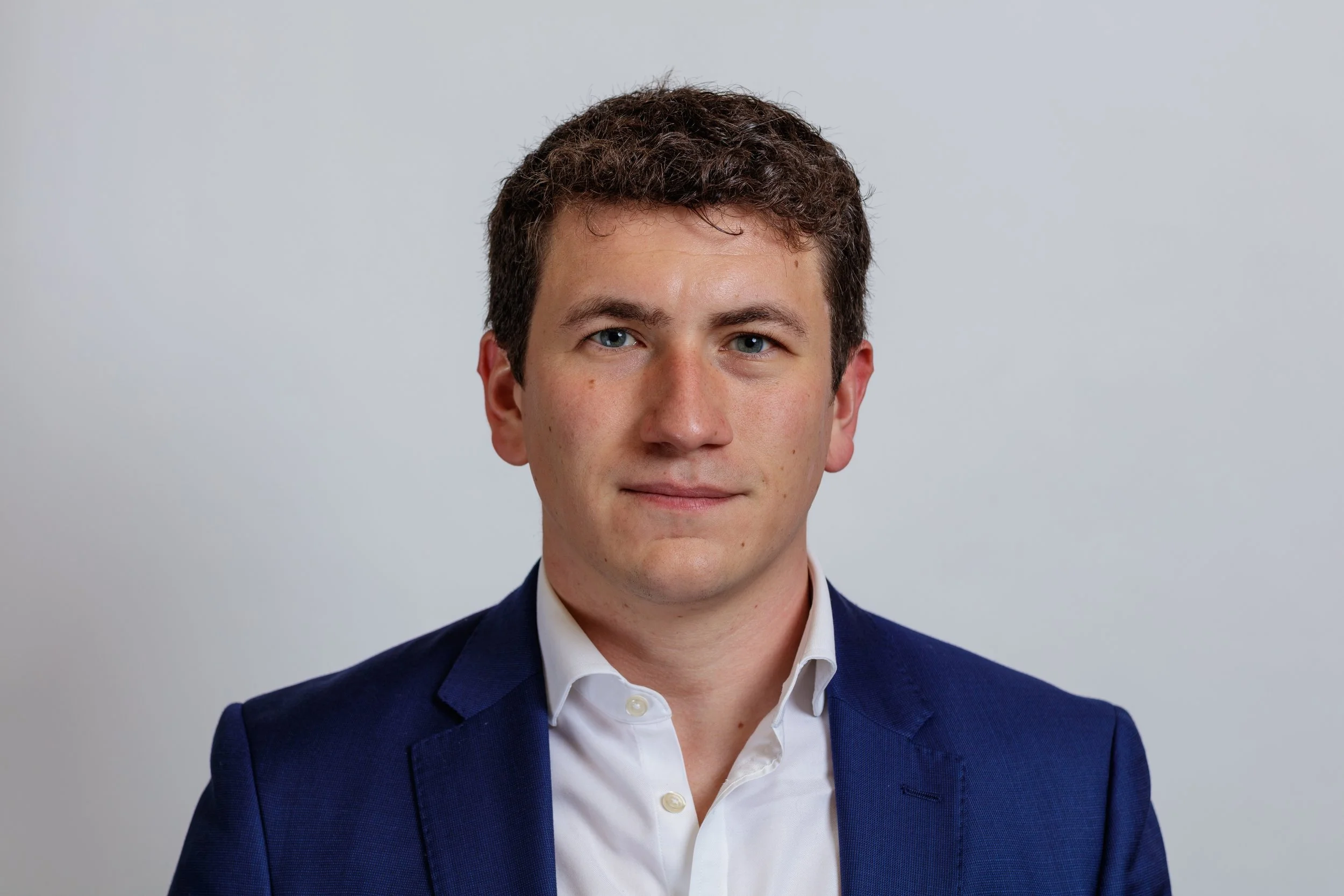
Alex Bartlam is a co-founder of Tallia. He holds a BEng in Electrical and Electronic Engineering and served as an officer in the British Army. He finished his service as a Captain, managing communication and information systems for the UK-led mission training the Ukrainian Armed Forces. He then completed an MPhil in Technology Policy at Cambridge Judge Business School as a member of King’s College, where he and Jack Mander founded Tallia through the King’s E-Lab and Accelerate Cambridge.