
Written by Karol Wapniarski
I met my co-founder on my first day in Cambridge.
It was September 2025, and I had just come to begin a PhD in logic and analytic philosophy, having a general interest in entrepreneurship but no thought of starting a company. As it turned out, my first day in the city was also the first day of the King’s E-Lab Residential Programme, to which I had been admitted, and among the people there was Jeremi, who was doing a PhD in computational genetics and was to soon become my co-founder. In the ordinary course of Cambridge life, a logician and a geneticist have very few reasons to meet, but the E-Lab gave us one. It was the first door I walked through in Cambridge, and most of the doors I have found since were pointed out to me by people I met behind it. I have come to think that this is how Cambridge works for anyone with an idea: almost everything is on offer, but someone has to tell you where it is, and you have to have the courage to ask.
The idea I brought with me to the Residential Programme was a good deal older than my time in Cambridge. In high school, I learnt Latin from scratch in three weeks from a textbook that used the so-called natural method: no translations or grammar drills, but immersion in the target language and presenting new words in context. I went on to take third place in Poland’s national Latin Olympiad, but what stayed with me afterwards was the method. I used it to learn five more languages before my high-school time was over, and somewhere along the way, I became convinced that it could be built into an app. For several years, though, that conviction was as far as it went.
During the E-Lab residential we worked in teams, and I decided to try the idea out on my teammates. To my surprise, they took to it seriously, agreed to make it our project, and we spent the week developing it together and finally pitching it. It was exciting to watch people I had known for a few days take up an idea I had been carrying around since school, and it made that idea feel like something I could actually build. Jeremi was among those watching the pitch, and he liked what he heard. We started talking once the programme was over, and before long we were building it together. That idea is now Loquelo, an app that teaches languages through full immersion, with material personalised for each learner.
With Jeremi, we did not start as friends who decided to build something together, but became friends by building it, and that order has served us well. Officially, I am CEO, also leading the technology, while Jeremi is COO – in practice, we both do a bit of everything, but we have never had to argue about who decides what. We are also both polyglots: I know eight languages and Jeremi five, most of them learnt, in his case too, through immersion, so in a sense we are building the app we wished we had had.
After the September Residential, we therefore decided to treat the app idea seriously. In November, we got through the qualifying round of Pitch@King’s, and around the same time Maximilian, one of the E-Lab mentors, mentioned a programme I had never heard of: EnterpriseTECH, which Cambridge Judge Business School runs for early-stage technology ventures. I applied and was accepted, and with my place funded by the E-Lab, I followed the programme from January to April alongside my doctoral research.
The most valuable thing EnterpriseTECH gave me was a way of looking at a project. Much of the programme consisted in assessing someone else’s venture critically and from the outside, and once you have done that properly for another team you can do it to your own, whose weak points become much harder to ignore. Ours, as with many early-stage startups, was that we had been pitching a method when we should have been pitching a problem the method solves. When we went looking for it, it turned out to be access. Most language courses teach through a language the learner already knows, so a separate course has to be built for speakers of every language. A method that works without translation can teach anyone, whatever their native language. That realisation changed the way we talk about Loquelo, and the programme also introduced us to mentors we would not otherwise have met.
In February, we won the best pitch prize at ai@cam’s Sciencepreneurship Bootcamp, and in April, we were runners-up in the Pitch@King’s final. Neither result settled anything on its own, but both were welcome encouragement. But none of this would have happened without people: Kamiar, Sophie and Francesca at the E-Lab, among others, were on hand with advice and support whenever we needed it, and the momentum that the idea had lacked for years came largely from them and from the people they put us in touch with. It was through Jeremi, too, that I found my way into the Cambridge University Polish Society, which has become both a circle of friends and a source of contacts that have mattered for Loquelo. A great deal of my life in Cambridge, inside the startup and outside it, can be traced back to that first E-Lab week!
The most recent door was SPARK 2.0, the King’s E-Lab incubator programme, which we have just completed. Where EnterpriseTECH had taught us to look at Loquelo from the outside, at SPARK we met people who do that for a living. We prepared our investor materials during the programme and took them into conversations with investors, who asked questions we could not yet answer. Being caught without an answer is unpleasant, but it showed us what we still had to work out, and those conversations are continuing.
The first version of Loquelo is now on the App Store and the Google Play ahead of our public launch – it landed there exactly one year after Jeremi and I first met, and in November I am going to California, having been selected for the Silicon Valley Fellowship.
What strikes me most about the Cambridge ecosystem is its abundance. Competitions, accelerators and funds are scattered across the colleges and departments as well as the Judge Business School, and all of them are open to a student with an idea. In a single year, my own route has run through a collegiate entrepreneurship lab, a business school programme and a university-wide AI initiative, now leading to a fellowship in California.
The only trouble is that this abundance is hard to see from outside, because there is no single map and a great deal depends on being told where to look. EnterpriseTECH is my own example: the programme that changed how we talk about Loquelo was one I did not know existed until a mentor mentioned it. For someone who has just arrived, then, the first difficulty is simply finding out what exists. This is where the E-Lab works wonders, since it is an entry point that a newcomer can actually find, and the people in it know what lies beyond. Almost every step I have taken this year began with someone there naming a programme or a person I had not heard of.
If you have just arrived with an idea you have been carrying around for years, say it out loud to the first group of people who will listen, and then ask them which doors to try next. I did the first within a week of arriving, and I have been doing the second ever since.
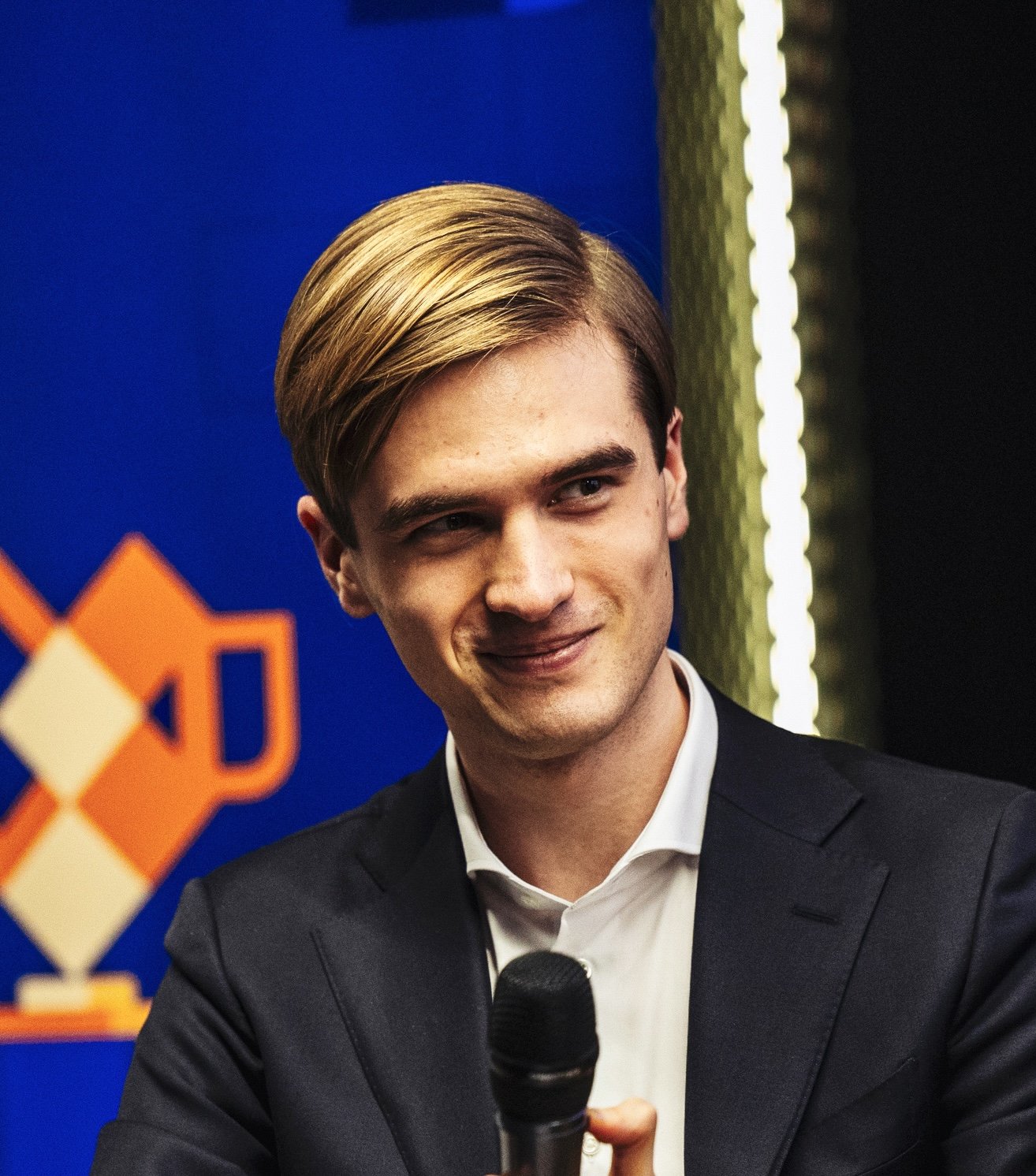
Karol Wapniarski is a PhD student in Philosophy at King’s College, Cambridge, working in logic and analytic philosophy. He holds degrees in philosophy and classical philology from Adam Mickiewicz University in Poznań and works as a literary translator from Latin, Ancient Greek and several modern languages. He is the co-founder and CEO of Loquelo, a language-learning app built on immersive, context-driven acquisition, which recently completed SPARK 2.0, the King’s E-Lab incubator programme.