
From PhD to Founder: Why Technical Expertise is Only Half The Battle
Written by Bernard Cho
My research into precision medicine started, perhaps like the passions of many, from personal frustration.
For a long time, I watched my family struggle to navigate a healthcare system where complex medical histories were difficult to communicate, and treatments often felt like trial and error, even in the 21st century. Witnessing avoidable harm to those closest to me made me realise that if my family was experiencing this, then surely countless others were too. And it seemed like there might be something that could be done about it.
This is what drove me to pursue a PhD in Clinical Neurosciences at Cambridge. But within this, I felt that I couldn't just study the problem; I had to fix it. Working alongside clinicians ensured that my research was directly relevant to the challenges at the bedside. That experience, seeing both the research gaps and the real-world impact, is what then led me to found Med Arcade after completing my PhD.
I chose the founder’s path because I wanted to feel closer to those who were using these technologies and the freedom to explore ideas that directly benefit patients.
My journey into entrepreneurship actually began before I started my PhD. I joined Entrepreneur First (EF) before my doctorate, after which I joined EWOR and the King’s E-Lab SPARK 1.0 incubator. Yet, even with this relatively early clarity, the transition from academia to a startup revealed challenges that were not immediately obvious from within a technical scope.
The technical aspects are often the easier hurdle for a PhD student. The real challenges are the insecurity, the constant uncertainty, and the need for a completely different set of skills that come from applying technical expertise and discovery. Suddenly, you are responsible for management, legal frameworks, and people skills. You quickly realise that you cannot do this in isolation. It is vital to stay connected to the wider ecosystem. People within this community have likely faced the exact set of problems you are experiencing and are usually willing to help because they know how difficult the path is. I never take this support for granted, and I believe in giving back whenever possible. It is why I am sharing my experience here.
It is common for founders to move through multiple accelerators. Startups require different types of support at various stages of their development. For me, EF provided a "Startup 101" and the initial framework for thinking like an entrepreneur. EWOR then helped me ideate and validate my concepts while connecting me with a global community of talented founders.
Then came SPARK.
While other programmes helped me focus on the fundamentals, SPARK provided the quick sprint and the reality checks I urgently needed. We were put in front of successful founders who shared their failures with refreshing honesty. None of the sugarcoating that you tend to see on LinkedIn and social media these days. They didn't just offer praise. They pulled us back to earth and forced us to prioritise action over the academic tendency to over-plan. The results were tangible.
Through SPARK, we secured investment from Cambridge Enterprise Ventures, presented at the House of Lords, and built connections with industrial leaders that remain active today. We ended the programme with 10+ VC calls and a much stronger footing in the Cambridge ecosystem. These kinds of networks are a lifeline because the initial stages of starting a company can be incredibly lonely. You need to be surrounded by people who speak the same language of risk and ambition – those with whom you can share your successes, failures, and struggles.
The sheer volume of research and industrial talent coming out of Cambridge is unreal. If you look closely at many successful companies that seem to exist outside the city, you will often find a Cambridge connection at their core. Being part of this ecosystem gives you an "unfair advantage." It provides the resources to turn a technical theory into a functional business.
As founders, we must be agile. We have to maximise impact with whatever resources we have at hand. It is easy to get stuck in the cycle of planning and ideation because it feels like progress. In reality, execution is the only thing that sets a founder apart. The opportunity to build something meaningful exists here and now.
For those in Cambridge, SPARK could be the most immediate catalyst to stop planning and start executing. For those of us coming from an academic background, that shift in mindset is the most important leap we will ever take.
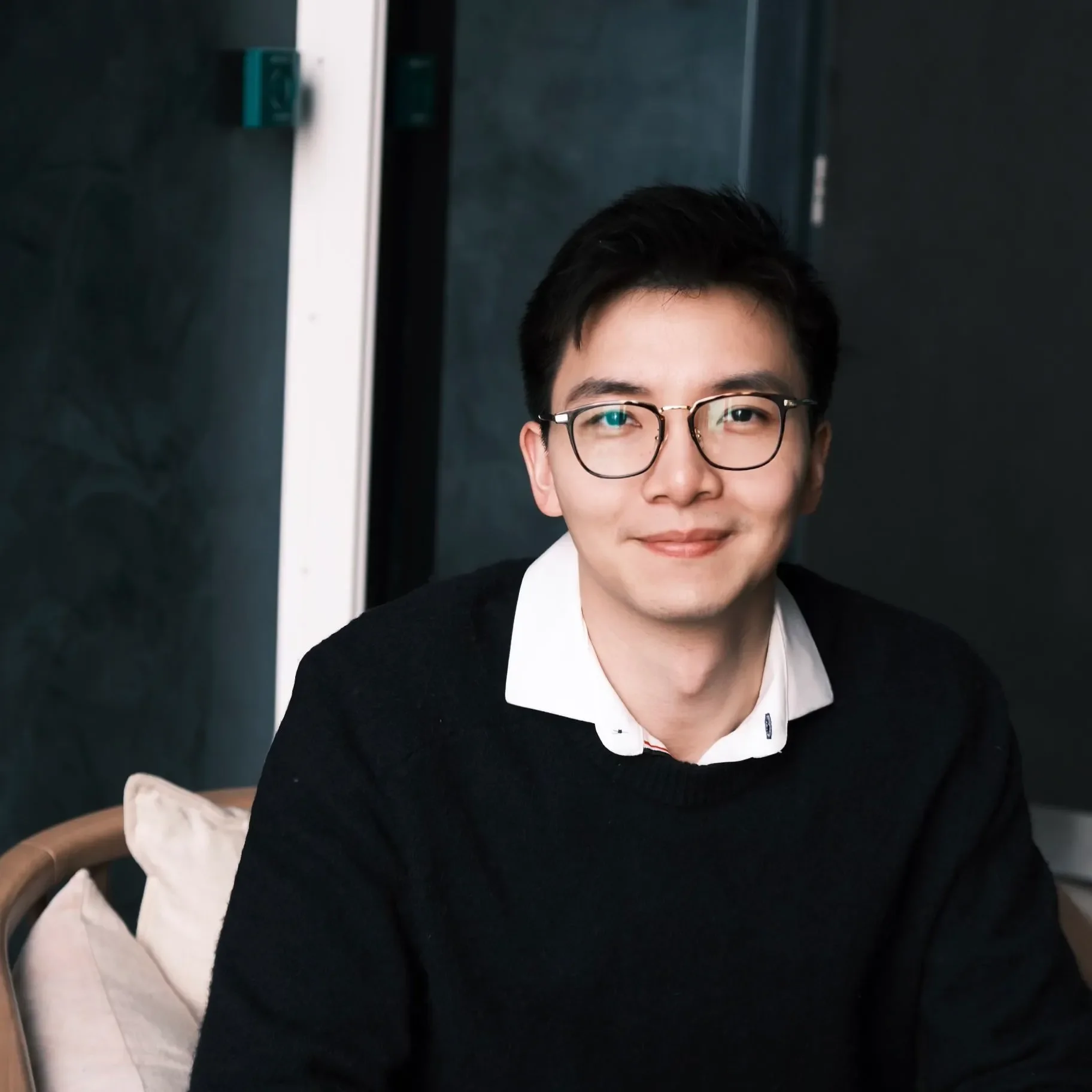
Bernard Cho is the Founder and CEO of Med Arcade, a clinical intelligence platform that enables clinicians to extract actionable insights from patient data more quickly than would otherwise be the case. Bernard completed his PhD in Clinical Neurosciences at the University of Cambridge with a focus on stroke genetics and, in 2025, participated in the inaugural SPARK 1.0 programme supported developed by the King’s E-Lab in collaboration with Founders at the University of Cambridge, succeeded in securing the prize distributed by Cambridge Enterprise Ventures. An alumnus of Entrepreneur First (EF) and EWOR, Bernard is dedicated to bridging the gap between clinical research and precision medicine at the point of care.