
Banking Nigeria’s Invisible Women
Written by Laurianne Lingbondo
I came into the King’s E-Lab conversation on 4 March with a familiar framework in my head: fintech as infrastructure, financial inclusion as access. What I left with was something more uncomfortable, a recognition that access without visibility is not inclusion at all. Listening to Olapeju Nwanganga, founder of Ploutos Page, I found my assumptions quietly dismantled, one by one.
The trap of familiarity
Before the session, I was very familiar with the idea of a “market woman” as a Congolese woman myself. My mum was one, and many times when she was not present, I had to be one too. I never, however, truly grasped their power. Instead, for me at the time, they just existed in the community and were not actors with any tangible power because of the informal nature of the sector.
Nigerian market women, like most African market women, are the silent pillars of our community; feeding and keeping the community dressed whilst raising doctors and engineers with the money they make. Every community in Nigeria has market women selling. Vegetables, meat, clothes, palm oil, the list goes on. All the everyday essentials are provided by them. According to Nairametrics, women and girls make up 49% of Nigeria's population but remain largely confined to the informal economy, with minimal representation in industry and the service sector. They are the backbone of agriculture, making up 67% of the farming workforce and producing about 75% of the country's food, yet most of this work, averaging 17 hours daily when combined with domestic duties goes entirely unpaid.
Nwanganga reframed my assumptions about being invisible entirely. These are women who collectively move millions of naira every year. Crucially, they are not invisible because they are not creating value; they are invisible because the formal financial system was never designed to include them. As Nwangnga says, the women are “unbankable” not because they are unworthy, but because they are unseen”. These words stayed with me long after the room emptied. This distinction between value and visibility matters: the problem is not the people, it is the architecture.
Inclusion begins with meeting people where they are
One of my deepest takeaways from the conversation was Nwanganga’s definition of digital inclusion.
I have previously assumed, as many do, that inclusion is primarily a question of device access. Get someone a smartphone, and the doors are immediately opened. But the speaker challenged this assumption: “Inclusion…”, she said, “…begins with meeting people where they are, not where the technology is”. ÓWÀ by Pepcode, her digital bookkeeping app, is designed precisely with this principle in mind. Low digital literacy is not a barrier to work around; it is the starting point for design. Agents sit with traders, speak local languages, and build financial records over time. The result is what she calls a “phygital” model, part physical, part digital, and it works because it respects the social fabric already in place.
Trust is not an obstacle – It is the infrastructure
Another insight that has reshaped my thinking concerned the idea of trust: not as a barrier to digital adoption, but as a foundation to build upon. Nwanganga's venture deploys community-embedded human agents who speak local languages and operate within the social rhythms traders already know, bringing technology into a familiar world rather than demanding adaptation to a foreign one. The human layer, in other words, is not a temporary bridge but the architecture itself, a woman who has sold tomatoes in the same market for a decade carries an unrecognised asset: a track record of reliability that formal financial systems have never been able to see. Nwanganga's platform changes that by digitising trading patterns and transactional histories to create financial identities where none previously existed, making informal vendors, as she put it, “digitally visible”.
Purpose without viability is not enough
Nwanganga did not only alter assumptions and help shift mindsets that have long shaped thinking in the African context. She also offered a key lesson to young African founders: clarity of purpose is not sufficient without a viable business model.
Nwanganga’s own principle was clear from the offset: enter a market only if there is a real problem to solve, and only if you can be profitable in solving it. Passion is fundamental but it cannot operate successfully on its own. Both passion and profit are required for impact. This is a standard to which I will hold myself. Social impact without sustainability is not a solution; it’s a dependency.
Sitting in Cambridge, surrounded by institutional architecture that has been built and has survived over centuries, I am reminded that the most durable systems are the ones that integrate the people they are meant to serve, not as beneficiaries but as participants whose existing knowledge, labour, and consistency must counted. In Nigeria, Nwanganga’s work is doing just this and I look forward to seeing where the journey takes her.
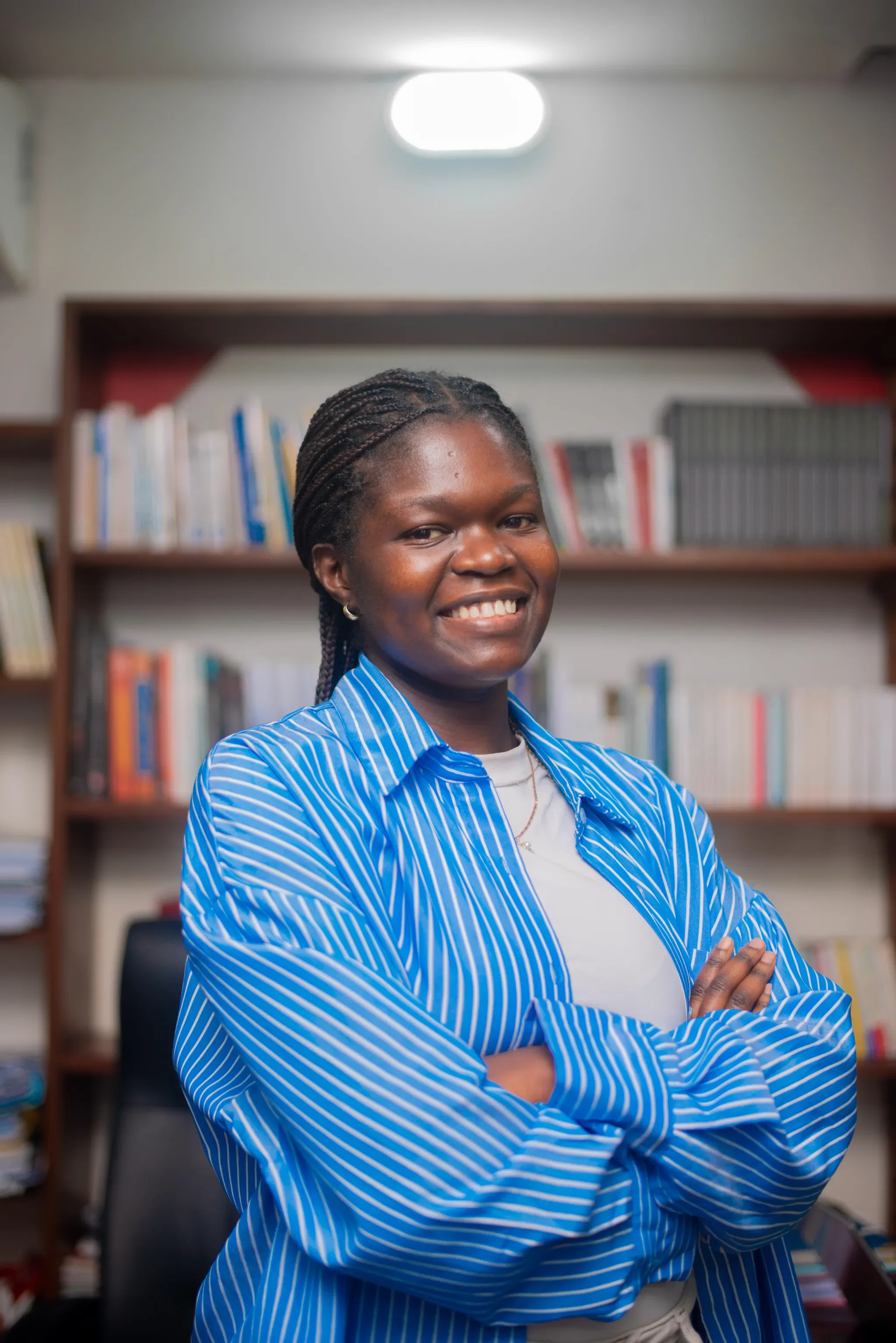
Laurianne Lingbondo is a MasterCard Scholar pursuing an MPhil in Sociology (Media & Culture) at the University of Cambridge, researching algorithmic impacts on Black women journalists in South Africa. She holds an Honours degree in Journalism from the University of Johannesburg and brings hands-on experience from roles spanning media monitoring, communications strategy, and digital engagement. Previously stationed in Tanzania with Crossroads International Canada, she designed communications initiatives supporting community development. Combining scholarly rigour with practical expertise, Laurianne is committed to advancing media justice and equitable digital futures.