
What Kind of Leadership Does the Age of Artificial Intelligence Demand?
Written by H.E. Mbelwa Brighton Kairuki
I would like to begin with a simple proposition. Artificial Intelligence will transform our world. Leadership will determine whether that transformation becomes progress. Everything else follows from that single idea.
Throughout history, every major technological breakthrough has expanded what humanity could achieve. The steam engine transformed industry. Electricity reshaped economies. The internet connected billions of people in ways earlier generations could scarcely imagine.
Yet none of those inventions determined history on their own. People did. Institutions did. Leadership did. Artificial Intelligence is no different. Much of today's discussion focuses on what AI can do. That is an important conversation, but it is not the most important one.
The more important question is this: What kind of leadership does the age of Artificial Intelligence demand? That is the question I would like us to consider this evening.
As a lawyer by training and now a diplomat, I have learnt that every major technological advance eventually becomes a question of governance. New technologies emerge first. The law follows. Public policy follows. International cooperation follows. Leadership is what brings these worlds together.
We are already witnessing that transition. Artificial Intelligence is no longer confined to research laboratories or technology companies. It is changing the way governments deliver services, businesses make decisions, universities educate students and courts administer justice.
For lawyers, judges, and policymakers, this is not a distant debate. It is today's reality. And it presents us with an unusual challenge. For the first time in history, we have created systems capable of generating ideas, analysing information, and influencing decisions at extraordinary speed.
They can process knowledge. They cannot exercise judgement. They can recommend. They cannot accept responsibility. That distinction is more important than it may first appear. Justice is not simply about reaching a decision. It is about reaching the right decision.
That requires something no machine possesses. Wisdom. Integrity. Accountability. Those qualities remain the responsibility of people. That is why I believe the conversation about Artificial Intelligence is, at its heart, a conversation about leadership. Not leadership that resists innovation. Not leadership that embraces technology uncritically. But leadership with the confidence to encourage innovation while safeguarding the values that define open, democratic, and just societies.
History offers many examples of societies transformed by technology. History offers far fewer examples of societies that successfully governed those transformations. That is the challenge before our generation. Not simply to invent. But to lead wisely. Allow me to explain what that means in practice by drawing on Tanzania's own experience.
Diversity and Tanzania’s Example
When new technologies emerge, societies often respond in one of two ways. Some see only opportunity. Others see only danger. Experience suggests that neither view is sufficient. Every technological revolution has created new possibilities while introducing new risks. Artificial Intelligence is no exception. The challenge for governments is not to choose between innovation and regulation. It is to ensure that both advance together.
That has been Tanzania's approach. We have never regarded Artificial Intelligence as an end in itself. We see it as a tool—a powerful one—but still a tool. Its value lies not in its sophistication, but in its ability to improve people's lives, strengthen public institutions, and expand economic opportunity.
Technology should always serve society. Never the other way around. This thinking is already influencing the way we are modernising our public institutions, including the administration of justice. Every justice system faces familiar pressures. Cases become more complex. Citizens rightly expect timely decisions. Courts are expected to deliver justice that is not only fair but also efficient.
Technology can help. But we have been careful to define its role. Artificial Intelligence can assist with transcription, translation, document management, and case administration. These are important functions that reduce delays and improve efficiency.
What it cannot do is replace judicial reasoning. The responsibility for interpreting the law, weighing evidence, and delivering justice must always remain with judges. That is not simply a legal principle. It is a constitutional principle.
Justice is ultimately a human responsibility. Every judgment affects people's lives. Behind every case file is a family, a business, a community, or an individual seeking fairness. Those realities require judgement, empathy, and accountability—qualities that cannot be delegated to software.
For us, Artificial Intelligence should strengthen the administration of justice without diminishing the responsibility of those entrusted to uphold it. The same philosophy guides our broader digital transformation.
Recently, Tanzania embarked on the development of a National Kiswahili Large Language Model. Some may regard this as another digital initiative. I see something much deeper. It is an investment in our future. Language is more than vocabulary. It carries history. It carries culture. It carries identity. It reflects how communities understand the world. If Artificial Intelligence is to become a truly global technology, it must also become a technology that understands the diversity of human experience. That includes African languages. That includes Kiswahili.
Today, more than 200 million people communicate in Kiswahili across Africa. It is one of the fastest-growing languages on our continent and an official working language of the African Union. It deserves a meaningful place in the digital age.
Developing a Kiswahili language model is therefore about much more than building software. It is about ensuring that future generations can engage with technology in a language that reflects their own culture and identity. It is also about confidence. Confidence that Africa should not merely consume Artificial Intelligence developed elsewhere. Confidence that Africa can help create it.
Across Africa, we possess extraordinary assets. We have the world's youngest population. We have rapidly growing centres of innovation. We have remarkable entrepreneurial talent. We have extraordinary linguistic and cultural diversity. These are not constraints. They are strategic advantages. If we invest wisely in education, scientific research, digital infrastructure and innovation, Africa will not simply participate in the next technological revolution. It will help shape it.
Education and “Leadership Literacy”
If Artificial Intelligence is changing the world, then it must also change the way we educate those who will lead it. That responsibility rests heavily on our universities. Institutions such as Cambridge have never simply prepared graduates for the jobs of today. They have prepared generations to solve problems that did not yet exist. That tradition is more important now than ever before. The lawyer who graduates this year will practise in a profession very different from the one many of us entered.
Routine legal research that once required days may soon take minutes. Thousands of documents can be reviewed almost instantly. Contracts can be drafted with remarkable speed. Translation across languages has become faster and more accurate. These developments should be welcomed. But they also raise a more important question. What will distinguish an outstanding lawyer when every lawyer has access to the same technology? The answer will not be technology. It will be judgement.
Clients will continue to seek lawyers who exercise sound judgement under pressure. Judges will continue to rely on advocates who present honest arguments supported by credible authorities. Governments will continue to depend upon legal advisers who understand not only what the law permits, but also what justice requires.
Artificial Intelligence can strengthen professional practice. It cannot replace professional character.
Not long ago, I participated in a discussion with senior lawyers about the growing use of Artificial Intelligence in legal practice. One participant described receiving a legal opinion that was exceptionally well written. The reasoning appeared persuasive. The language was elegant. The legal authorities looked entirely convincing. Until someone verified the citations. Several of the cases simply did not exist. The technology had produced them. Confidently. That conversation has stayed with me. Not because the technology made a mistake. Human beings have always made mistakes.
What concerned me was something else. The mistake looked convincing. That is the challenge before our profession. Artificial Intelligence can produce answers with extraordinary confidence. But confidence is not the same as accuracy. And accuracy alone is not the same as justice.
Law has never been about producing the fastest answer. It has always been about reaching the right answer. The future lawyer must therefore master two complementary skills. The first is technological literacy. The second is ethical judgement. Knowing when to question technology. Knowing when to verify its conclusions. Knowing when to say: "This requires human judgement." Artificial Intelligence is no longer a technology issue alone. It has become a leadership issue.
Indeed, it has become an international leadership issue. The countries that help shape the rules governing Artificial Intelligence will also help shape the international order of the decades ahead. For Africa, this is a moment of opportunity. Our contribution should not be measured by the technologies we consume. It should be measured by the ideas we contribute. The standards we help shape. The innovations we create. And the leaders we produce.
Looking Forward
As I conclude, allow me to return to where I began. Artificial Intelligence will transform our world. The real question is whether we will provide the leadership needed to ensure that transformation advances justice, expands opportunity and strengthens human dignity.
History tells us that every technological revolution eventually becomes a test of leadership. Artificial Intelligence will be no different. The decisions we make during the next decade will influence our democracies, our legal systems, our economies, and the confidence people place in public institutions.
That responsibility belongs to all of us. Governments. Judges. Lawyers. Universities. Businesses. Innovators.
Speaking directly to students, allow me to say this: You are entering your careers at an extraordinary moment. Some of you will become judges. Some will become legislators. Some will build companies that redefine legal practice. Some will negotiate international agreements governing Artificial Intelligence. Others will lead institutions that none of us can yet imagine.
Whatever path you choose, remember one principle. Technology should always remain in the service of people. People should never become servants of technology. Master Artificial Intelligence.
But never surrender your curiosity. Your integrity. Your compassion. Or your independent judgement. These qualities will always distinguish exceptional leaders from capable technicians.
For Africa, this is a defining moment. Our question is not whether we will participate in the Artificial Intelligence revolution. We already are. The question is whether we will help shape its future. I believe we can. Because Africa has something valuable to contribute. Our young people. Our creativity. Our diversity. Our resilience. Our experience.
Artificial Intelligence will be stronger if it reflects the experiences and aspirations of all humanity. That is why Africa must be present where ideas are developed. Where standards are negotiated. Where research is undertaken. Where partnerships are formed. And where the future is being designed.
When historians look back on this period, they are unlikely to remember which country developed the fastest processor or which company released the most advanced algorithm. Those achievements will be surpassed. What they will remember is whether our generation had the wisdom to ensure that technology strengthened freedom rather than weakened it. Whether it widened opportunity rather than inequality. Whether it reinforced justice rather than undermined it. Whether it served humanity.
That is the legacy we have the opportunity to build. Not through technology alone. But through principled leadership. Leadership that is ethical. Leadership that is courageous. Leadership that understands that innovation and responsibility are inseparable.
If we succeed, future generations will inherit not only more powerful technologies, but stronger institutions, fairer societies and greater confidence that human ingenuity, guided by wisdom and anchored in the rule of law, remains our greatest strength.
That is the future worth building. That is the responsibility entrusted to our generation. And that is why I remain optimistic.
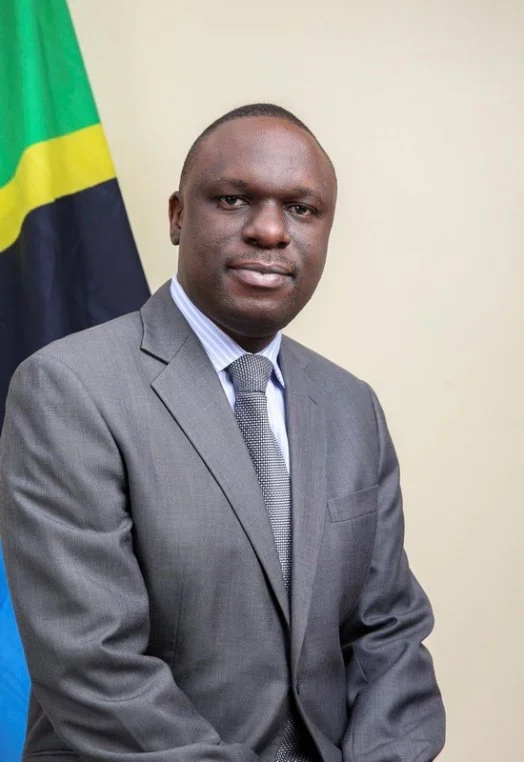
H.E. Mbelwa Brighton Kairuki is the current High Commissioner of the United Republic of Tanzania to the United Kingdom since 2023. His diplomatic career includes being Director of the Asia & Australasia Department in Tanzania’s Ministry of Foreign Affairs and International Cooperation. He served as Assistant to the President of Tanzania, working in the State House under President Jakaya Kikwete. Before that Kairuki also served as Tanzania’s Ambassador to China, with additional accreditation to Vietnam, Mongolia, and North Korea. On a personal and community level, he contributes to philanthropic causes: he is a patron of Malaika Kids UK, a charity supporting vulnerable children in Tanzania, which reflects his commitment to social development and humanitarian engagement.