
Problem-First Hacking: Why Building for the Problem Makes the Best Technology
Written by SMU Lit (Max Ho Zong Xian, Francis Chua Ern Chiat, Kelvin Chik and Rajpreet Singh S/O Suckpal Singh)
Four law students walked into a hackathon with a problem that had been bothering us for a long time. Oral advocacy is one of the most important skills a litigator can develop. It is also one of the hardest to practise. You can read every mooting guide, memorise your submissions, and know your authorities inside out, but none of that truly prepares you for standing before a judge or tribunal. Advocacy is often described as the “thrill” of litigation — the challenge of thinking on your feet and responding in real time.
But that thrill comes with interruptions, difficult questions, and the occasional moment when your carefully prepared submissions disappear the instant you're cut off mid-sentence.
The only way to become comfortable with that pressure is through experience. The problem is that meaningful advocacy training often depends on access to experienced practitioners or judges who are willing to conduct realistic practice sessions. For many students, those opportunities are few and far between. That was the gap we wanted to close.
Throughout the weekend, we tried to build something genuinely useful rather than something merely impressive. As law students ourselves, we drew heavily on our own experiences — the moots we had argued, the practice rounds that pushed us to think faster, the internships where we watched real lawyers prepare for hearings, and the conversations we'd had with professors and practitioners about what actually makes an advocate better. Every feature we considered was tested against that lived experience. We asked ourselves not “is this technically impressive” but “would this have helped us, sitting in a moot room at 11pm, trying to anticipate the next question from the bench”? That grounding in our own reality as students and interns, rather than in abstract assumptions about what lawyers might want, shaped almost every decision we made.
We should also be honest about how we walked in. We joined as a predominantly law-background team, with comparatively little coding or hackathon experience next to many of the other competitors. At first, that felt intimidating — everyone else seemed to be moving faster, speaking a different technical language, and building with a confidence we didn't yet have. But we'd encourage anyone in a similar position not to let that hold them back. The talks organised by the competition on how to use the available tools, and on how to approach a hackathon strategically even without a technical background, were genuinely inspiring and made an enormous difference. They levelled the playing field in a way we didn't expect, and by the end of the weekend, our lack of a conventional technical background felt far less like a disadvantage and far more like a different lens through which to see the problem.
One of the biggest lessons we took away from the hackathon was that it is easy to get caught up chasing the most sophisticated model, the flashiest interface, or the longest list of features. We quickly realised that none of those mattered if we could not clearly answer one question: What problem are we solving?
Having a well-defined problem statement became our anchor throughout the weekend. Whenever we debated a new feature or design choice, we came back to our users. Would this genuinely improve their experience? Would it help them become better advocates? If the answer was no, we moved on. Instead of trying to build everything, we focused on building the right thing.
Looking back, the competition was never just about AI or coding. It was about understanding users, working effectively as a team, and solving a real problem in a practical way.
To anyone considering a future Hack the Law competition, our advice is simple: start with a problem that genuinely matters to you. Let that problem guide every decision you make. Impressive technology may capture attention, but solutions that meaningfully improve people's lives are what leave a lasting impact.
Beyond the hackathon itself, we also made a point of making the most of our limited time in Cambridge. We carved out moments to take in the city’s awe-inspiring architecture. But far more valuable than the buildings were the people we met there. Cambridge, for that short window, was full of like-minded individuals from all over the world, each bringing a different background, a different legal system, and a different way of thinking about the future of law and technology. That is an opportunity we have come to genuinely treasure, and one we do not take lightly. We are taking home not just the experience of competing, but the perspectives and knowledge of the people we met. Insights that we hope will sharpen our own thinking, shape how we approach our legal education and the law going forward. Eventually feeding back into our own legal professions at home.
The hackathon was, in that sense, an incredibly rewarding opportunity to meet talented participants from around the world, each bringing different perspectives on the future of law and technology. Beyond the competition itself, the conversations, friendships, and shared enthusiasm for innovation were just as memorable as anything we built. We leave with not only a deeper appreciation of what technology can achieve, but also valuable lessons that we will carry into our studies, our future legal careers, and we hope, our contributions to the profession and our communities.
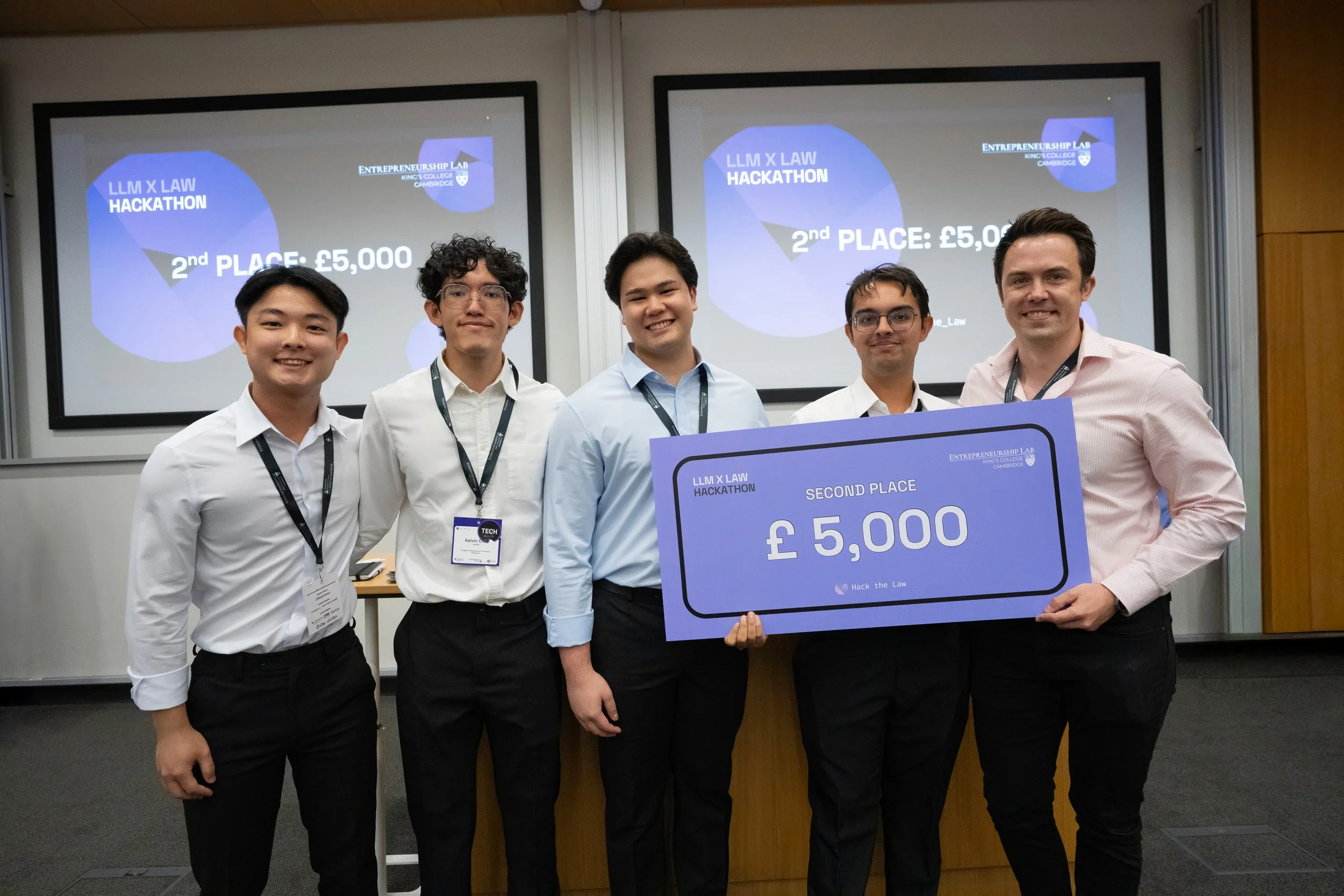
Max Ho Zong Xian is an LLB '28 student at SMU Yong Pung How School of Law and President of the SMU Legal Innovation & Technology Club. He has taken part in several moots, including the 2026 Nelson Mandela World Human Rights Moot, and is interested in legal tech and its role in advancing the legal profession.
Francis Chua Ern Chiat is an LLB '28 student at SMU Yong Pung How School of Law and Vice President of the SMU Legal Innovation & Technology Club. He is currently representing SMU in the 2026 LAWASIA International Moot. His interests include dispute resolution, advocacy, and leveraging legal tech to improve legal education and research.
Kelvin Chik is a BSc’28 (Information Systems) student at SMU. An experienced hackathon competitor, he has built award-winning AI-powered and full-stack solutions. He is passionate about AI, software engineering, and transforming professional workflows through technology.
Rajpreet Singh S/O Suckpal Singh is an LLB '28 student at SMU Yong Pung How School of Law, Law Director of the SMU Legal Innovation & Technology Club, and a Director of the SMU Corporate & Commercial Club. He has represented SMU in international business competitions and is interested in corporate law, legal tech, and AI-powered legal solutions.